
solvida
5 Ways Sprinkler Systems Can Inflate Your Water Bill
As the population of North Texas continues to surge, so does the cost of water, one of our most precious resources. With water at a premium, it is more important than ever to have an efficient irrigation system and to carefully monitor how you’re using it to water your lawn and plants. To help you better manage the amount of water your sprinkler system uses, we are sharing five different ways that your sprinkler system can contribute to a high water bill.
Overwatering
The number one cause of water waste in most sprinkler systems is simply watering too much. It is often better for plants and grass to receive too little water than too much. When a plant has too much water even over a short period of time, it may develop fungal problems. Plants and grass will eventually drown and develop rotten roots if they are overwatered for an extended period of time. There is no such thing as a perfect watering schedule…a plant needs water when it is dry, and this condition will vary throughout the seasons, depending on the weather and depending on what the individual plant needs. Wait until the soil around your plants is dry to a depth of 2 inches before watering. By allowing your plants to become thirsty, the roots will begin searching and growing as they reach out to find water. This will develop a stronger root system and, ultimately, a stronger lawn and landscape.
Surface Runoff
Most yards have a degree of slope to them. This slope is essential so that stormwater and irrigation water moves away from your home to prevent damage to your foundation and landscaping. Depending on the grade of your property, you might find that after your sprinkler system has been running for a few minutes, the water is now just running down surfaces like sidewalks and roads or that water is pooling in your lawn. This wastes water and is not giving your lawn or plants the water they need. The next time you run your sprinklers, watch through the cycle and observe how long until you see surface runoff and make a note of this time. If, after 5 minutes, the water is running off, you should adjust the watering to 5 minutes at a time. This is known as the cycle and soak method. If you need to run your sprinklers a total of 10 minutes but notice runoff after 5 minutes, you should first run the sprinklers for 5 minutes, then wait for 30 minutes, and then run it for the remaining 5 minutes. This ensures that all irrigation water goes directly to where you intended, to the lawn and landscape, and stops water waste runoff.
Misaligned Sprinkler Heads
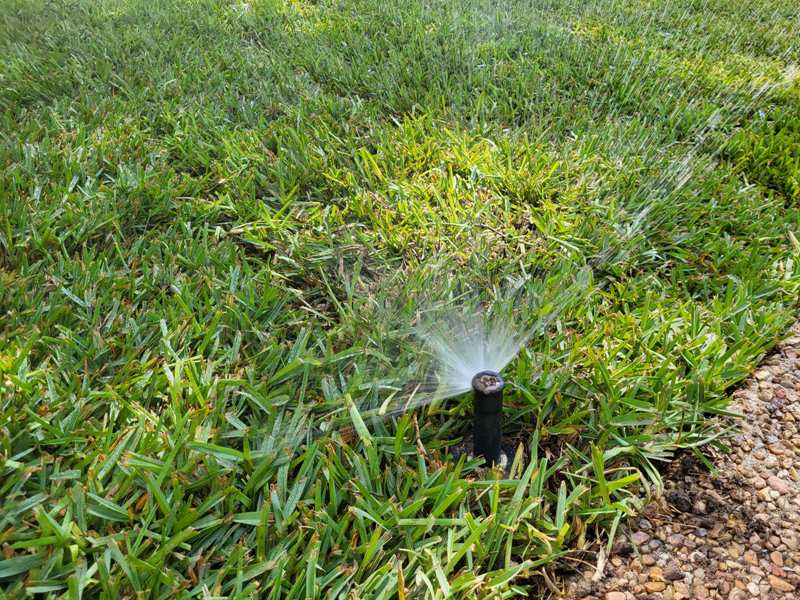
Over time, sprinkler heads and nozzles may stop retracting all the way, may get bumped or knocked sideways by foot traffic or a lawn mower. If the heads are misaligned and not watering where they should, you may be watering the sidewalk or driveway instead of the grass and plants, creating water waste. It’s an excellent practice to routinely observe your sprinklers in each zone as they run. Once you know how, it’s actually very easy to make small adjustments and realign the heads. If that all sounds too daunting, plan to call a professional irrigator to inspect and diagnose any sprinkler system issues. The best time to have this done is usually in the spring since the sprinkler systems have been either turned off or rarely used during the winter.
Failed Zone Valve
Each zone valve within your sprinkler system is controlled by a wire between the irrigation controller and itself. You have probably seen these sprinkler zone valves many times as you walk through the yard. They are typically installed underground inside of a container with a green circular lid called a valve box. Each valve controls whether or not water flows to the sprinkler heads for that specific zone. Oftentimes, when a valve solenoid or diaphragm fails, the valve stays in an open state, letting water pass through without your knowledge. Usually, this water waste goes without notice, slowly seeping through sprinkler heads and drip irrigation lines, wasting water and inflating your water bill.
Watering at the Wrong Time
Watering at the wrong time not only wastes water, but it also inflates your water bill. Don’t water your lawn or plants when the sun is highest or at night. Watering your plants when the sun is at its peak causes the water to evaporate before it can be fully absorbed. Additionally, watering during times of peak sun can scorch the foliage of your plants and sod. Watering during the middle of the night is also not ideal because it can lead to fungal diseases. The ideal time to water your grass and plants is in the early morning and the early evening, depending on the time of year and how often your landscaping needs water.