Landscape Design and Landscaping Installation
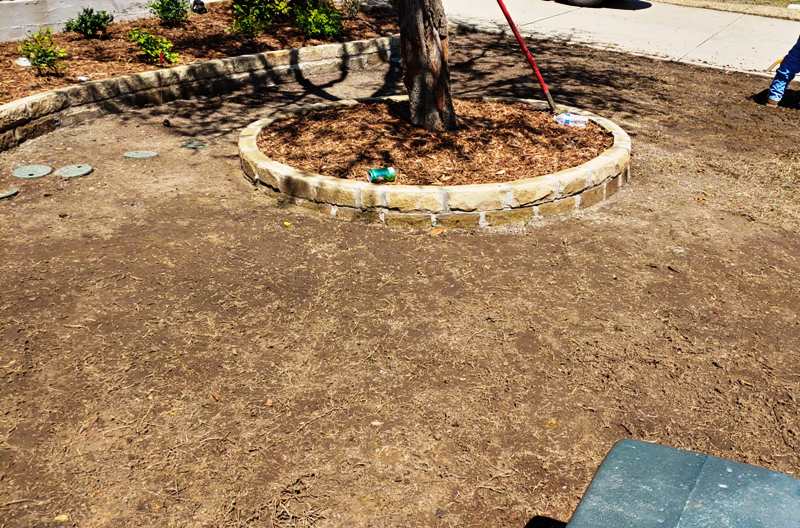

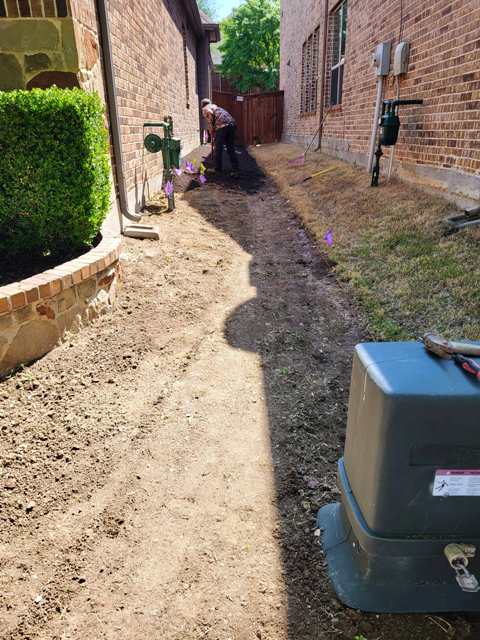
The areas along the sides of a home are the most neglected and troublesome for growing grass. In planned developments, most side yard areas tend to be narrow and run alongside a neighboring home. This layout will produce additional challenges for grass growth. We have outlined several of the challenges you may face when trying to grow grass in a side yard area, along with some solutions to consider.
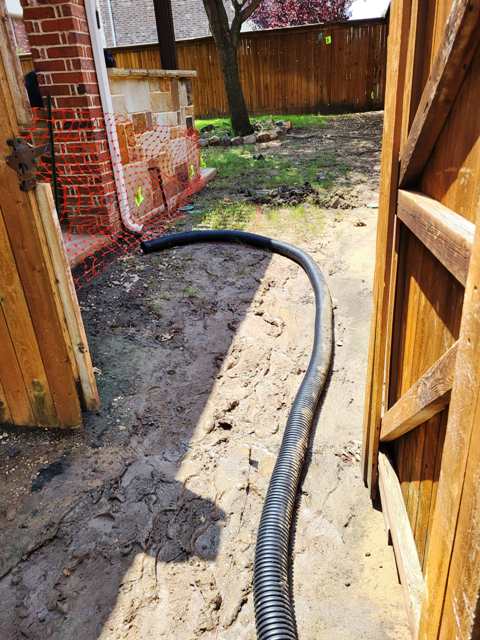
Your home most likely has a gutter and downspout system designed to manage rainwater that falls on the rooftop. A standard downspout system is designed to empty most of the gutter water directly into side yard areas. If your side yard has a neighboring house with a similar setup, that means both of your homes are emptying water into the same narrow strip of grass, making it a problem for you to control water runoff from neighboring properties. This gutter downspout design will erode soil near the foundation, change the established grade, which is meant to shed water away from your home, pool water, and eventually kill grass.
To correct drainage issues in your side yard area, you can extend and bury gutter downspouts to direct excess water away from your side yard lawn and regrade the yard to help prevent further soil erosion and standing water.
In most new subdivisions, neighboring homes are built 10-20 feet apart. This setup will leave each homeowner with about 5-6 feet between their home and property line. As the sun makes its way across the skyline each day, the entire side yard between you and your neighbor’s house might only receive an hour or two of direct sunlight, making it a challenge to grow grass in those shaded areas of the lawn. Furthermore, if you live in a two-story home and have a 6-8 ft tall fence, the amount of sunlight reaching grass in your side yard will be limited even further.
Although you cannot alter the position or height of your home, you may be able to increase sunlight by keeping trees and shrubs pruned in this area. In addition, store large items like garbage cans in places where they are not casting shade on your grass.
Turfgrass needs sunlight. How much sunlight turfgrass needs will depend on the type. Bermuda grass is the most common turfgrass to be installed in North Texas. Bermuda grass needs at least 6 hours of sunlight each day during the growing season. This amount of sunlight will definitely be a problem in most side yard areas. Without proper sunlight, Bermuda turfgrass can thin and eventually die.
To keep turfgrass growing in side yard areas with minimum sunlight, you need to plant a more shade-tolerant grass. Consider planting either St. Augustine or Zoysia grass, which are both more tolerant of shade.
Side yards are graded to shed water away from the structure. However, this grading can create a challenge because water will quickly run off the upper grade and pool on the lower grade, which will never water the grass evenly. This results in improper watering of turfgrass.
To properly water your lawn, you will need to find out how much water your grass needs and how to measure the water from your sprinklers. For example, a basic watering guideline for most warm-season grasses in North Texas is 1 inch of water per week. You can measure the amount of water using a watering gauge or measuring cups made specifically for sprinkler systems. To prevent water loss from the grading in your side yard, consider breaking your watering times up a bit. Rather than watering for an entire 10-minute cycle, you can water for 5 minutes, wait an hour, and then water for another 5 minutes. This is referred to as the cycle and soak method.
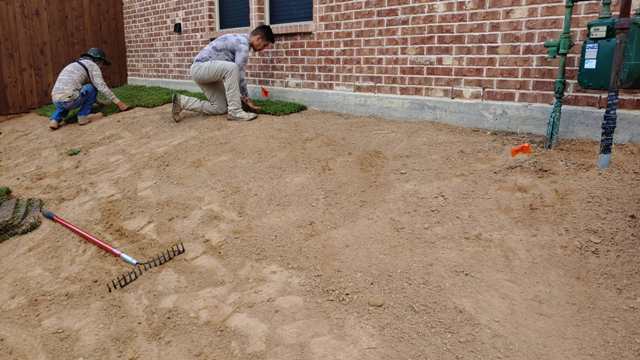
While not necessarily specific to side yard grassy areas, it is important to be aware of your soil’s health wherever you are growing turfgrass. In North Texas, we have compacted clay soils with poor drainage qualities, making it a challenge to grow grass in the side yard especially.
You can help correct poor-quality soil by incorporating organic matter. Rototilling a bit of sandy loam into clay soil can help improve drainage. Core aerate your lawn to break up the compacted clay soil.
Growing grass in your side yard area can be challenging. It is essential that you spend a bit of time studying your side yard to reveal the specific challenges you might be facing. Ensure that your watering is appropriate for the grade of the yard, that the water is draining away from the house and not pooling, and then finally, make sure you have the appropriate grass variety. If you decide to replace the grass, call the sod installation experts in Prosper, Texas, at Sol Vida Landscaping.